


About Us
Our group derives methods for generating intelligent machine behavior largely inspired by nature and biology. We call this approach computational intelligence. This encompasses numerous methods and techniques, such as artificial neural networks, evolutionary technologies (e.g., genetic algorithms), fuzzy systems, and swarm intelligence.
Our research focuses particularly on computational intelligence. We believe that we must learn from the "intelligent methods" found in nature. Our colleagues have extensive experience in this field.
As robotics evolves, it is becoming increasingly present in our daily lives. Therefore, it is ever more important to consider human interaction when designing robots, since alongside social robotics, the role of collaborative robots in industrial robotics is also growing, where robots no longer require physical separation, making joint work increasingly common.
Research Interests
▶ Computational Intelligence
Fuzzy systems, neural networks, evolutionary technologies, swarm intelligence-based systems.
Related publications:
☞ Interactive Bacterial Evolutionary Algorithm for Work Pace Optimization of Cobots
▶ Machine Learning
▶ Cognitive Robotics
Embodied cognition, adaptive behavior, sensorimotor integration, embodied AI, trajectory planning.
▶ Human-Robot Interactions and Collaboration
Robot behavior learning, human-robot communication, robot-human communication, trust calibration.

Related publications:
☞ Emotional empathy model for robot partners using recurrent spiking neural network model with Hebbian-LMS learning
☞ Informationally structured space for multimodal monitoring in smart houses
☞ Walking speed control in human behavior inspired gait generation system for biped robot
Research Methodology
Our research group employs the following methods: evolutionary computation (genetic algorithms, memetic algorithms), fuzzy systems, spiking neural networks, swarm intelligence, as well as the study of human-robot interaction and human-robot collaboration. The goal of these methods is the development of robots and intelligent systems, with a special focus on cooperating with the human environment.
Infrastructure
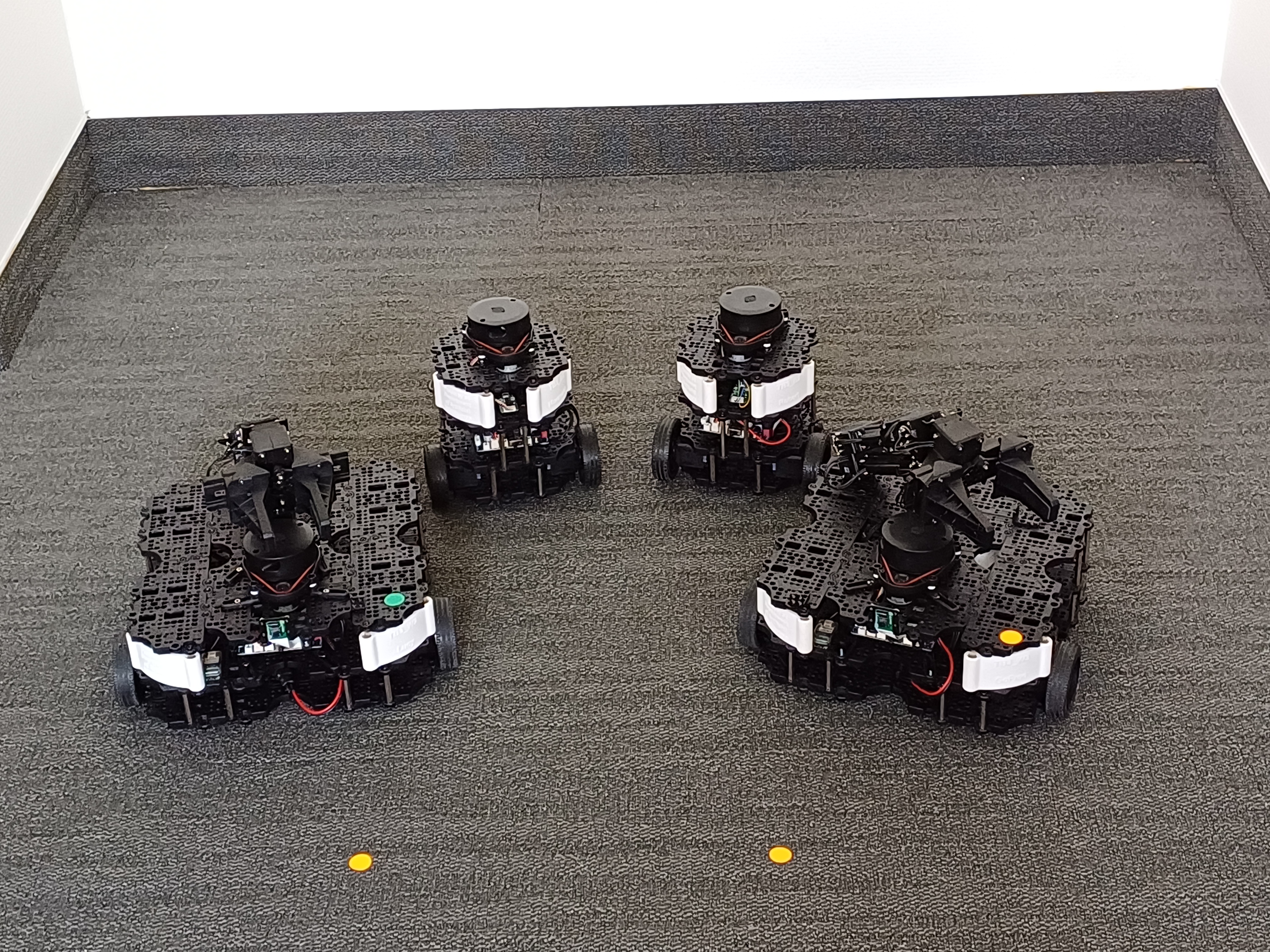
https://emanual.robotis.com/docs/en/platform/turtlebot3/features/#specifications

https://emanual.robotis.com/docs/en/edu/bioloid/premium/
➥ Right: Kassow KR1410 Collaborative Robot Arm (Robert Bosch Ltd.)
https://www.kassowrobots.com/products/7-axis-collaborative-robot-arm-kr-series
Research Staff
- János Botzheim, Associate Professor (Research Group Leader, MTMT)
- Márk Domonkos, PhD student
- Natabara Gyöngyössy, PhD student
- István Reményi, PhD student
- Szilárd Kovács, PhD student
- Szilárd Fecht, PhD student
- Aphilak Lonklang, PhD student
- Ákos Holló-Szabó, PhD student
- Hunor Lukács, PhD student
Funded Projects
- Anomaly detection (Bosch)
- Drowsiness detection (Bosch)
- Human-robot collaboration (Bosch)
- Production line optimization (Bosch)
- National Laboratory for Social Innovation
Selected Publications
- Bencsik, B., Reményi, I., Szemenyei, M. and Botzheim, J. (2023): Designing an Embedded Feature Selection Algorithm for a Drowsiness Detector Model Based on Electroencephalogram Data, SENSORS [DOI]
- Domonkos, M., Tresó, Á. and Botzheim, J. (2023): Online Surveying System for Experimentally Testing the Human Perception of Visual Gestures, 9th International Conference on Automation, Robotics and Applications [DOI]
- Lonklang, A. and Botzheim, J. (2023): A Rapidly-Exploring Random Tree Algorithm with Reduced Random Map Size, 9th International Conference on Automation, Robotics and Applications [DOI]
- Kovács, Sz., Bolemányi, B. and Botzheim, J. (2022): Placement of Optical Sensors in 3D Terrain Using a Bacterial Evolutionary Algorithm, SENSORS [DOI]
- Mohai, K., Kálózi-Szabó, Cs., Jakab, Z., Fecht, Sz. D., Domonkos, M. and Botzheim, J. (2022): Development of an Adaptive Computer-Aided Soft Sensor Diagnosis System for Assessment of Executive Functions, SENSORS [DOI]
- Gyöngyössy, N. M., Eros, G. and Botzheim, J. (2022): Exploring the Effects of Caputo Fractional Derivative in Spiking Neural Network Training, ELECTRONICS [DOI]
Contact
János Botzheim – botzheim@inf.elte.hu
Department staff: link