


About Us
The core activities of the research group are related to the development of polycrystalline systems with predefined properties, which they aim to influence in a controlled manner through the variation of thermomechanical manufacturing parameters. The research focuses on the design of advanced materials, the experimental characterization of microstructures, and the modeling of technological processes. In the field of innovative manufacturing technologies, the impact of technical parameters on product properties is less understood compared to traditional methods; however, the group's initial results indicate promising research directions. Their main goal is to integrate multiple effective modeling strategies and to create a virtual manufacturing platform that not only enables the production of materials in a virtual space but also ensures the control of real manufacturing processes, allowing for the in situ modification of manufacturing parameters depending on the desired final properties. In this way, several hidden aspects of the manufacturing processes can be revealed.
Research Interests
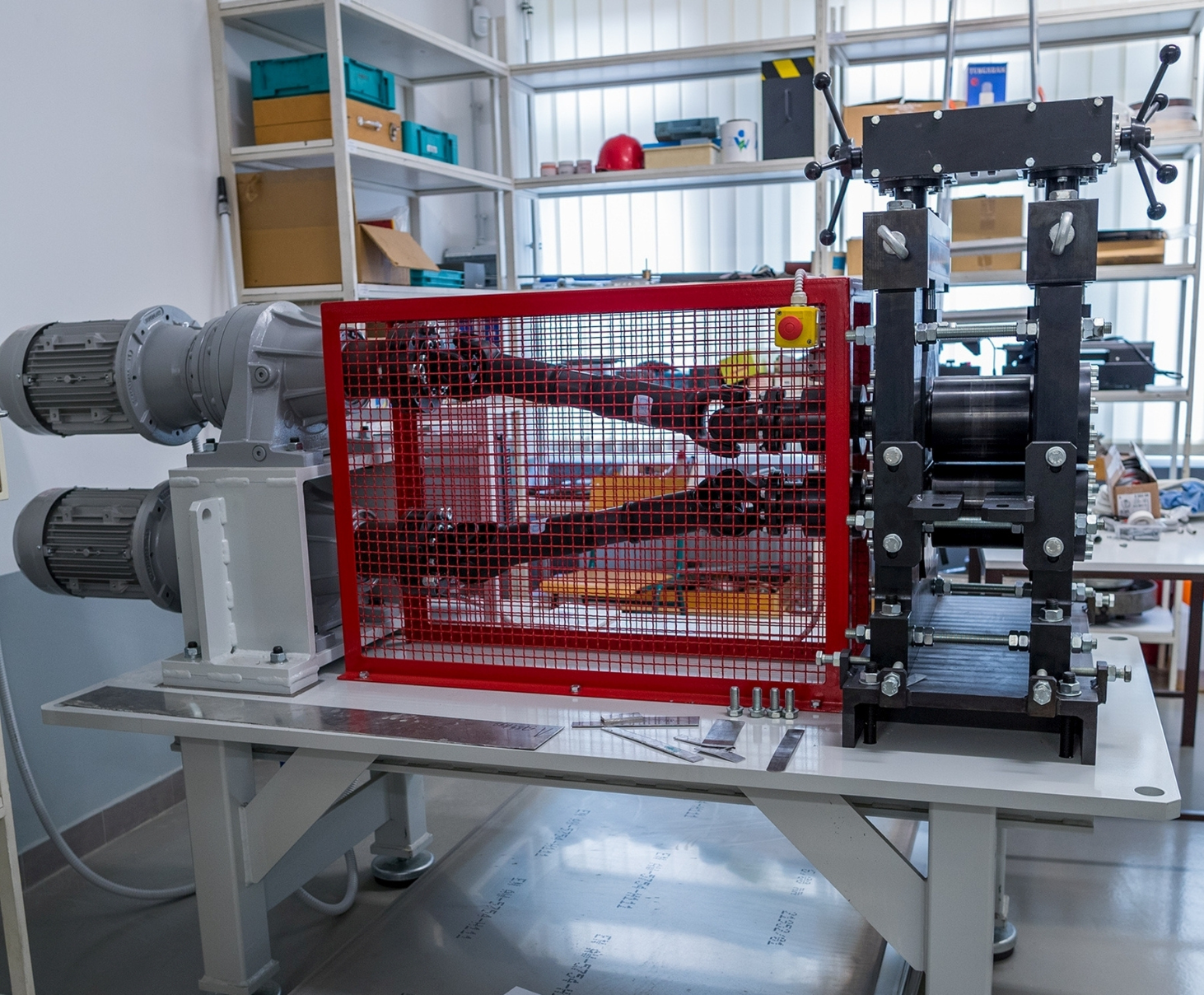
▶ Thermomechanical processing of polycrystalline materials
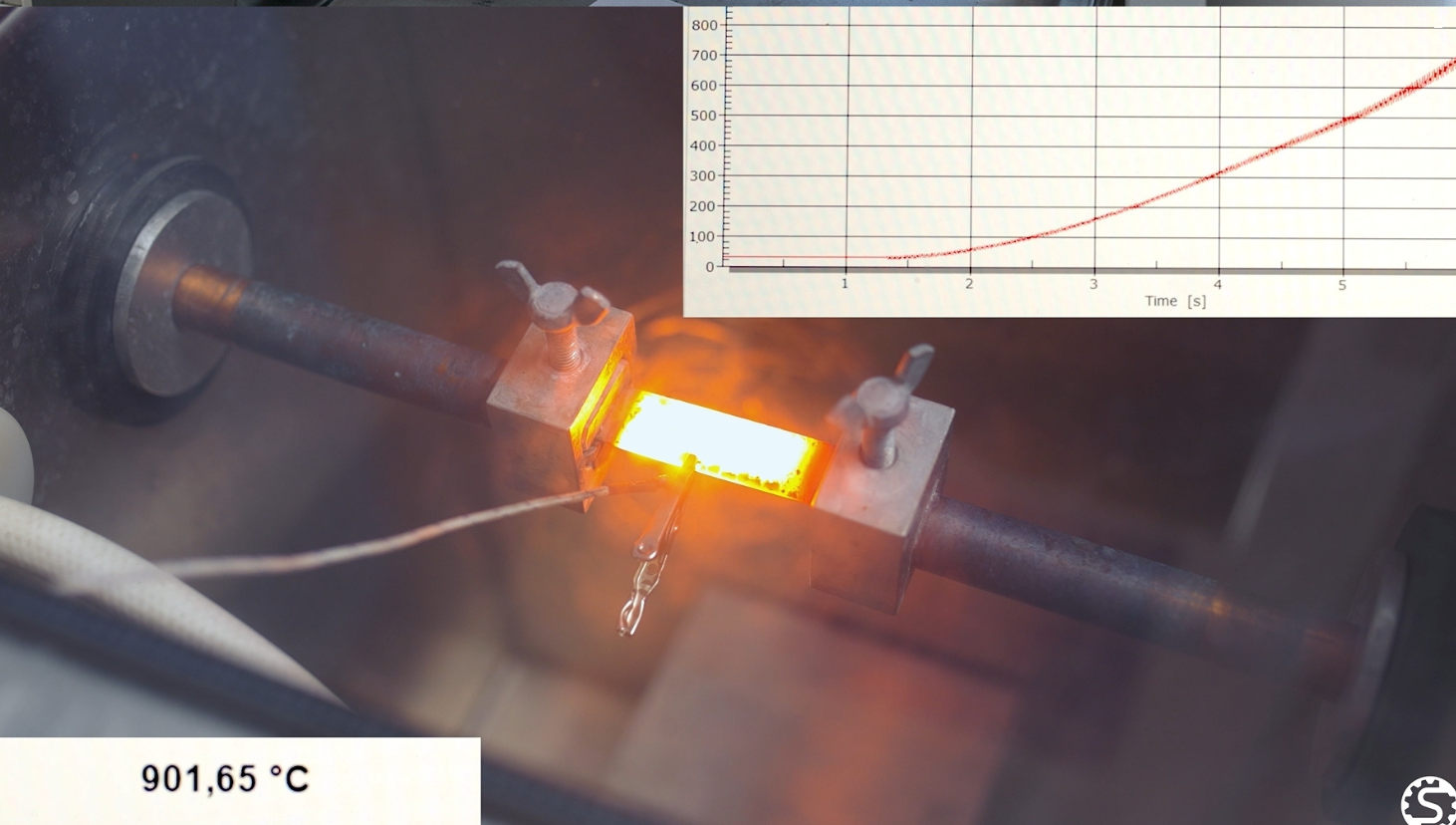
Heat treatment: Conventional (~50°C/min) and ultrafast (~1000°C/min) heating methods.
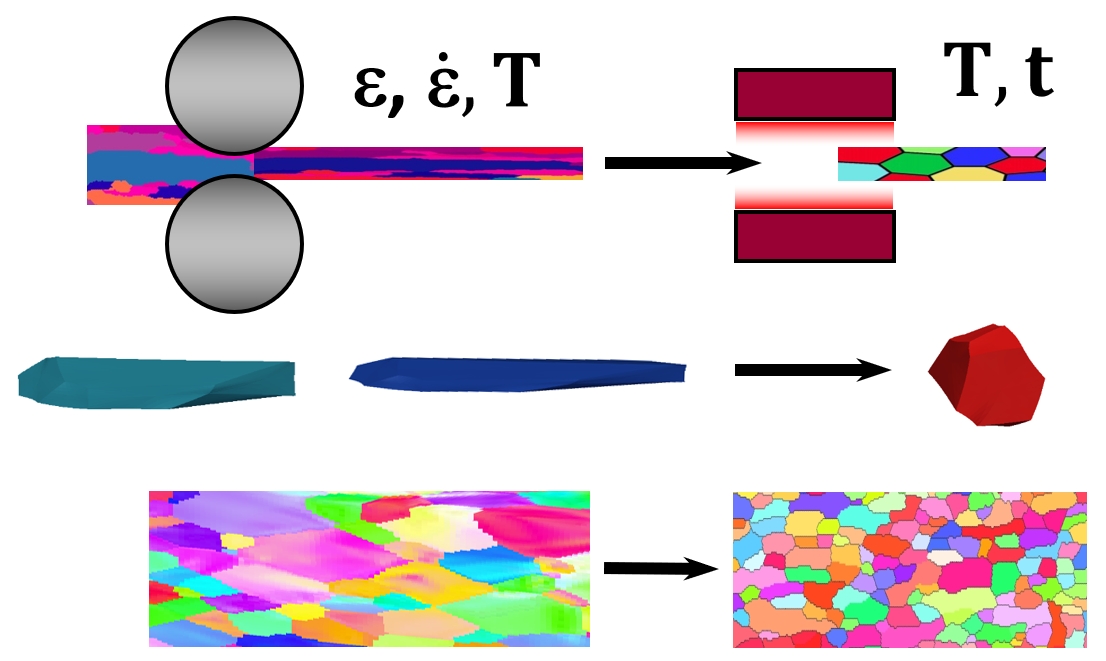
▶ Investigation of mesoscopic transformations: microstructural and crystallographic aspects
Related publications:
☞ Deformation, recrystallization and plastic anisotropy of asymmetrically rolled aluminum sheets
☞ Analytical description of rolling textures in face-centred-cubic metals
☞ Modeling the crystallographic changes in processing of Al alloys
☞ Correlation between dislocation hardening and the geometrically-necessary-dislocation densities in a hexagonal-close-packed Zr-2wt%Ti alloy
☞ Self-equilibrated backstresses induce compensation between hardening and softening: Micromechanical and microstructural features
☞ Crystallographic orientation and spatially resolved damage in a dispersion-hardened Al alloy
☞ Quantitative indicators of microstructure and texture heterogeneity in polycrystalline system
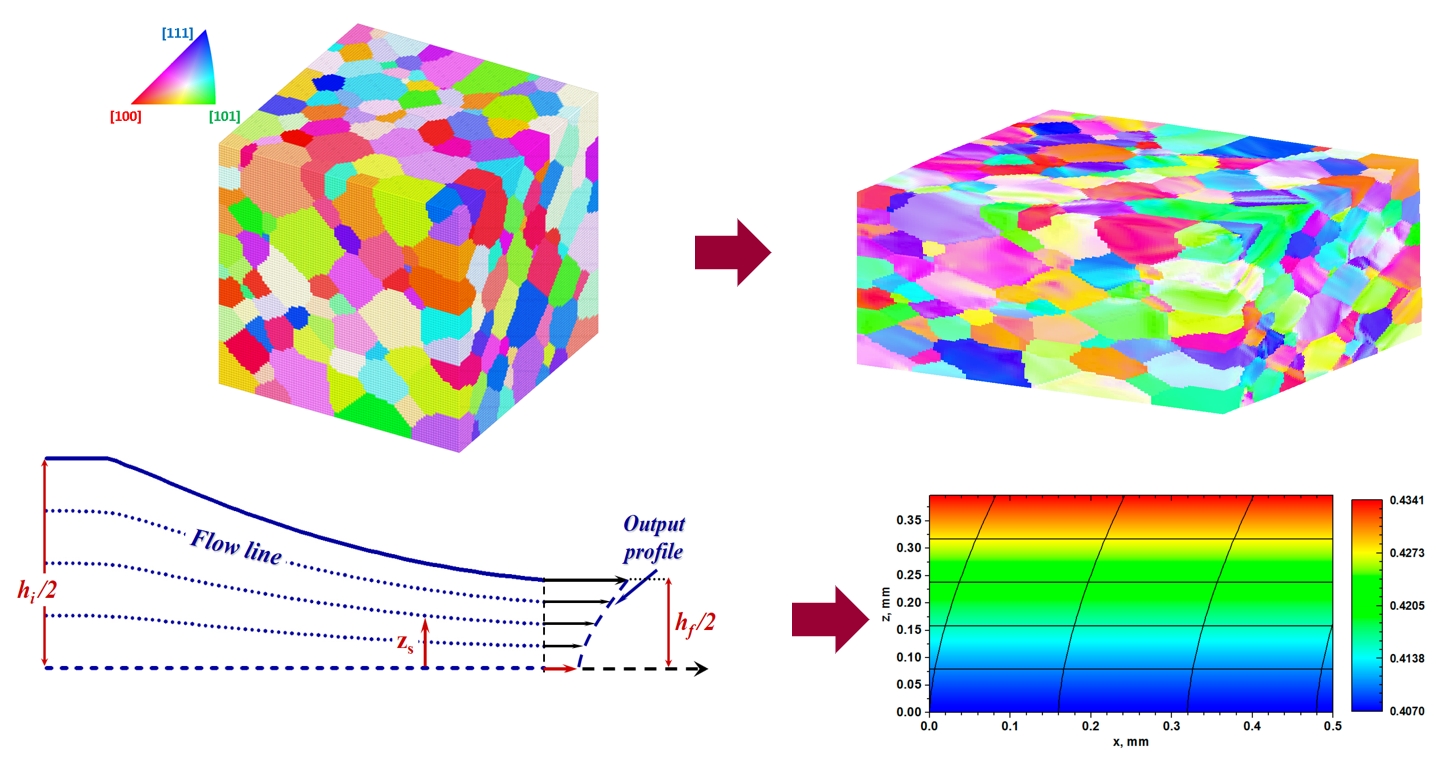
▶ Virtual thermomechanical processing of materials
Related publications:
☞ A new analytical approach for the velocity field in rolling processes and its application in through-thickness texture prediction
☞ https://doi.org/10.3390/met9101098">Assessment of flow-line model in rolling texture simulations
☞ Process parameter influence on texture heterogeneity in asymmetric rolling of aluminium sheet alloys
☞ https://doi.org/10.3390/app13074359">Assessment of deformation flow in 1050 aluminum alloy by the implementation of constitutive model parameters
☞ Process parameter influence on deformation and recrystallization textures in Al alloys
☞ Computationally effective modeling of cold rolling: application to Al alloys
▶ Modeling the evolution of crystallographic texture and texture-based properties in materials based on the principles of continuum mechanics and crystal plasticity theory
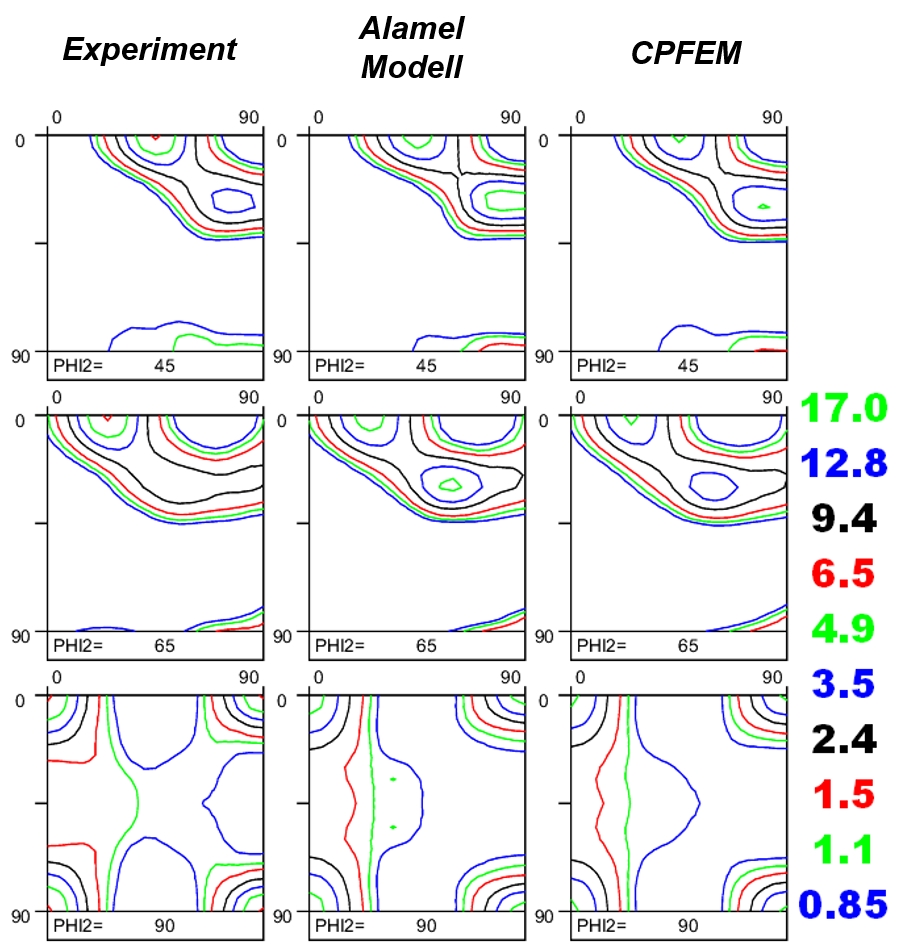
Related publications:
☞ Microstructural and crystallographic aspects of conventional and asymmetric rolling processes
☞ Texture evolution of AA3003 aluminum alloy sheet produced by accumulative roll bonding
☞ Evolution of recrystallization textures in particle containing Al alloys after various rolling reductions: Experimental study and modeling
☞ Texture comparison between room temperature rolled and cryogenically rolled pure copper
☞ Evaluation of crystallographic changes and plastic strain ratio in Al alloys
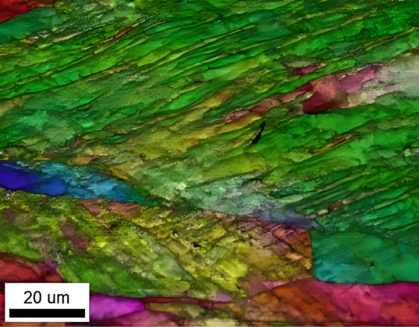
▶ Analysis of substructure evolution through indentation techniques and numerical approaches
.png)
Investigation of the evolution of geometrically necessary dislocations through orientation imaging microscopy.
Analysis of substructure using micro- and nanoindentation techniques.
Modeling of dislocation density evolution in deformed metallic systems using various numerical approaches.
Related publications:
☞ Assessment of dislocation density by various techniques in cold rolled 1050 aluminum alloy
☞ The dependency of work hardening on dislocation statistics in cold rolled 1050 aluminum alloy
☞ Correlation between dislocation hardening and the geometrically-necessary-dislocation densities in a hexagonal-close-packed Zr-2wt%Ti alloy
☞ Vickers indentation-based assessment of dislocation density and substructure evolution in aluminum alloys
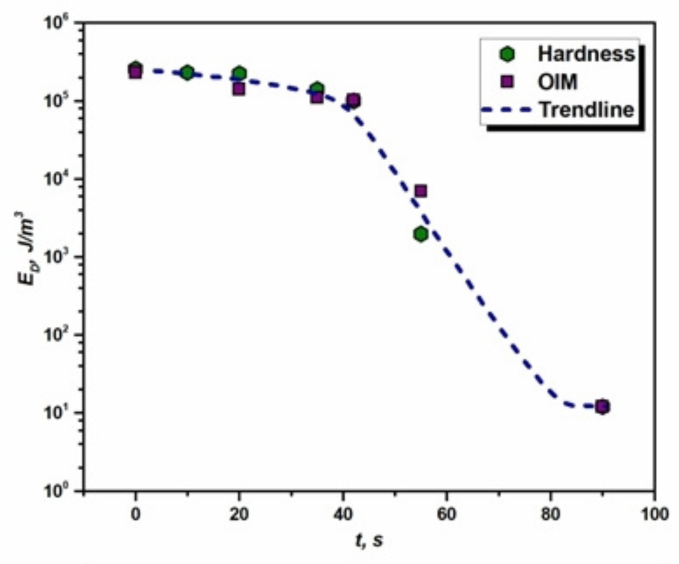
▶ Analysis of the kinetics of softening processes and softening phenomena in materials
.png)
Experimental investigation of softening processes in materials using orientation imaging microscopy and indentation techniques. Modeling the kinetics of recrystallization in polycrystalline systems.
Related publications:
☞ Assessment of recrystallization phenomena by numerical approximation and experimental evidence (lecture)
☞ Modeling the crystallographic texture changes in aluminum alloys during recrystallization
☞ Investigation of recrystallization kinetics in 1050 Al alloy by experimental evidence and modeling approach
☞ Simulating the kinetics of recrystallization in Aluminum alloys
☞ Effect of heating rate on the annealing behavior of aluminium alloys
☞ Crystal plasticity and continuum mechanics-based modelling of deformation and recrystallization textures in aluminum alloys
Research Methodology
▶ Characterization of materials using scanning electron microscopy, electron backscatter diffraction, and energy-dispersive analysis.
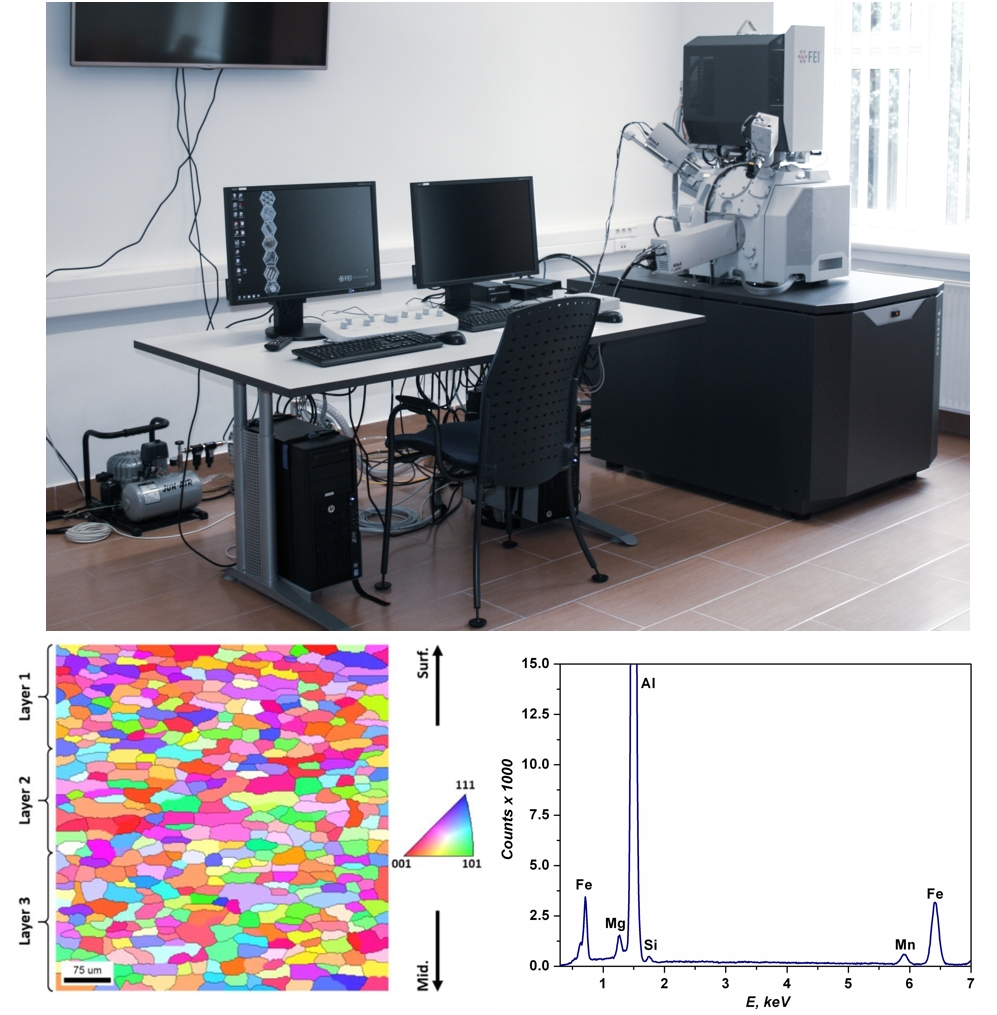
The microscope is also equipped with EBSD and EDX detectors, which enable the measurement of crystallographic texture and the analysis of chemical composition of materials.
▶ Investigation of mechanical properties at macroscopic, microscopic, and nanoscales.
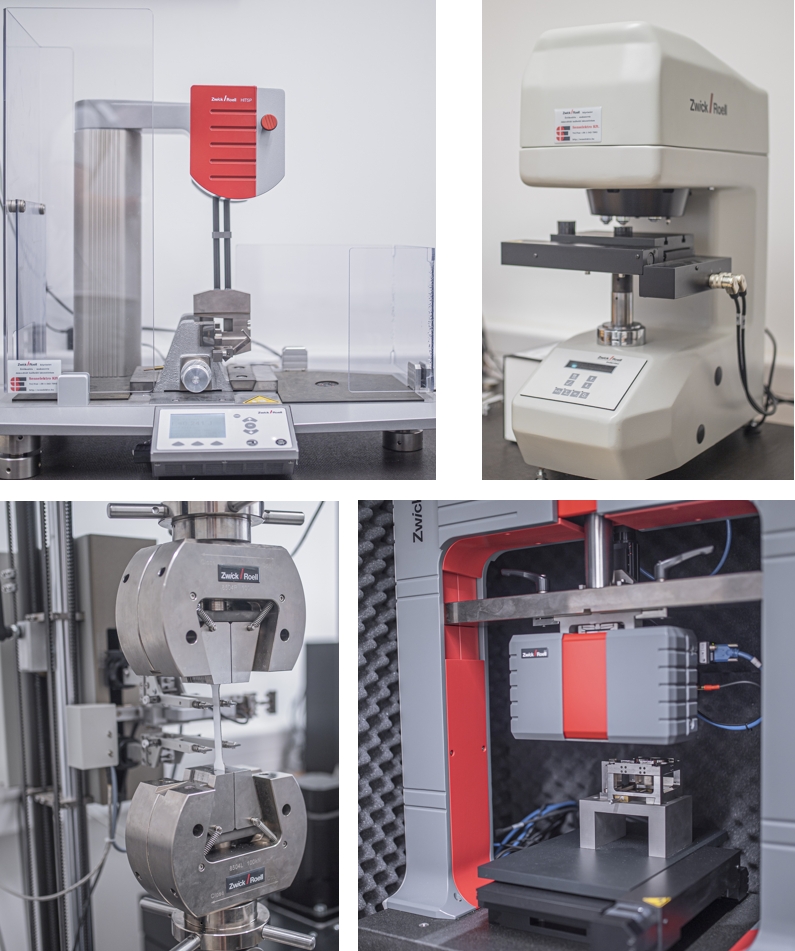
Determination of macroscopic properties through tensile/bending and Charpy testing: yield strength, tensile strength, flexural strength, hardening parameters, Young's modulus, Poisson's ratio, toughness, Lankford value, impact energy.
Microscopic properties: Vickers and Knoop microhardness using loads between 10 gf and 1 kgf.
Local indentation measurements with a Berkovich tip (loads in the micronewton range).
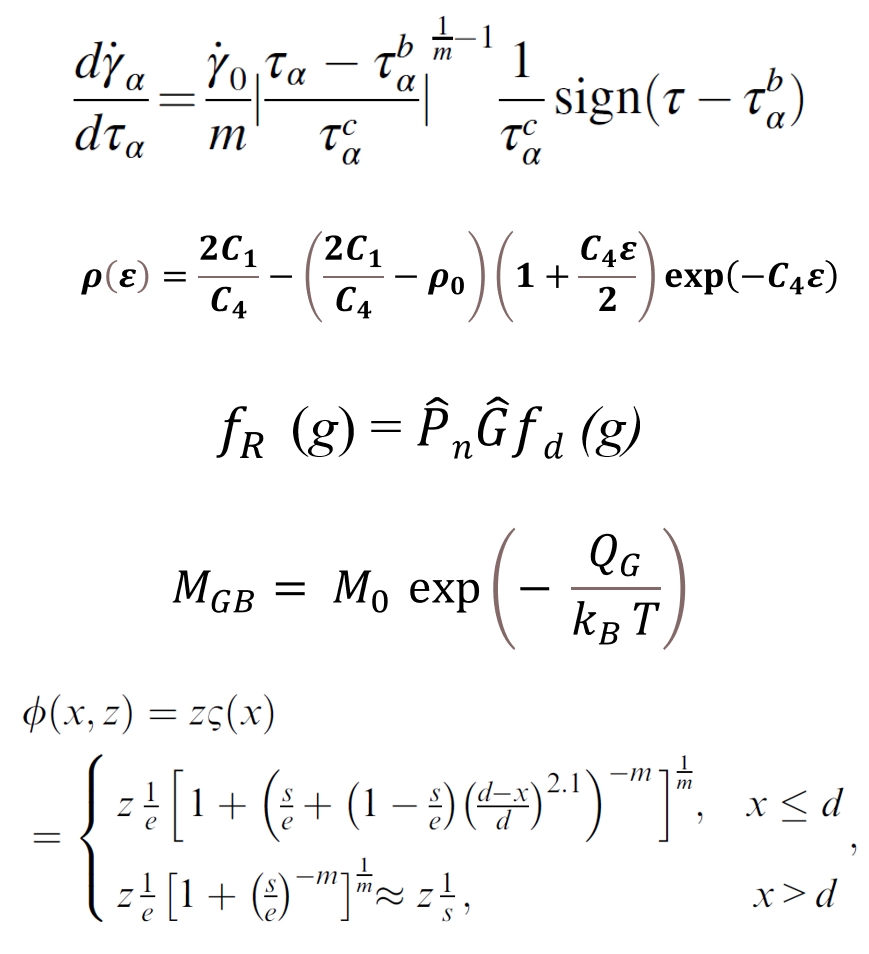
▶ Modeling of manufacturing processes through numerical approaches: finite element models, flow-line models, crystal plasticity models, and recrystallization models.
Infrastructure
Labor: link
Research Stuff
Prof. Dr. Jurij Sidor, DSc (Head of Research Group, MTMT, Tud-O-Méter)
Dr. Dániel Fenyvesi, Associate Professor, Senior Researcher
Dr. Tibor Borbély, Associate Professor, Senior Researcher
Dr. Beáta Herbáth, Assistant Professor, Senior Researcher
János Bátorfi, PhD student, Junior Researcher
János Tóth, Technician
and numerous BSc and MSc students
Projects
Security and data protection in the fields of material technology, industry 4.0 and energy engineering (2022-2025, pillar 3 in the project no. TKP2021-NVA-29 “Protection of high integrity national services and industrial infrastructures using cybersecurity, technological and legislative instruments”)
Innovative processing technologies, applications in energy engineering, and wide-range microstructure investigation techniques (2017-2021, workgroup 5 in the project EFOP-3.6.1-16-2016-00018 “Improving the role of research + development + innovation in the higher education through institutional developments assisting intelligent specialization in Sopron and Szombathely”)
OTKA. Modelling and complex experimental evaluation of texture dependent solid phase reactions in metallic systems (Project nr.: 119566)
OTKA. New avenues of production of bulk and composite nanostructured metals; experiments,characterization, modelling. (Project nr.: 143800)
Industrial projects:
2016: Microstructural investigation of MnZn ferrite. Industrial Partner: EPCOS Kft., TDK Group Company.
2019: Scanning electron microscopy: material examination by SE/BSE and EDX detectors. Industrial partner: Schaeffler Savaria Kft.
2020: Determination of mechanical properties by tensile, bending and Charpy methods. Industrial partner: Alpok Projekt Kft.
2021: Determination of microstructural differences by microhardness, scanning and optical microscopy. Industrial partner: BPW-Hungária Kft.
2021: Assessment of properties by microhardness and SEM. Industrial partner: iSi Automotive Hungary Kft.
2022: Determining the thickness of different layers using an optical microscope. Industrial partner: BPW-Hungária Kft.
2022: Fracture surface studies: Optical and Scanning Electron Microscopy. Industrial partner: Schaeffler Savaria Kft.
2022-2024: Development of Parabolic Spring. Industrial partner: BPW-Hungária Kft.
Key Publications
Sidor, J., Miroux, A., Petrov, R. and Kestens, L. (2008) ‘Microstructural and crystallographic aspects of conventional and asymmetric rolling processes‘, Acta Materialia, 56, pp. 2495–2507.
Sidor, J., Petrov, R. H. and Kestens, L. A. I. (2010) ‘Deformation, recrystallization and plastic anisotropy of asymmetrically rolled aluminum sheets‘, Materials Science And Engineering A, 528, pp. 413–424.
Sidor, J. J., Verbeken, K., Gomes, E., Schneider, J., Calvillo, P. R. and Kestens, L. A. I. (2012) ‘Through process texture evolution and magnetic properties of high Si non-oriented electrical steels‘, Materials Characterization, 71, pp. 49–57.
Sidor, J. J., Decroos, K., Petrov, R. H. and Kestens, L. A. I. (2015) ‘Evolution of recrystallization textures in particle containing Al alloys after various rolling reductions: experimental study and modeling‘, International Journal of Plasticity, 66, pp. 119–137.
Chakravarty, P., Pál, Gy., Sidor, J. J. (2022) ‘The dependency of work hardening on dislocation statistics in cold rolled 1050 aluminum alloy‘. Materials Characterization, 191, pp. 112166:1–112166:13.
Contact
Dr. Jurij Sidor – js@inf.elte.hu